Summer
SURVEY
We’re delighted to have you here on holiday
As part of our GSTC sustainability efforts, we are working to make our region even more livable and responsible for both guests and local residents.
Your opinion matters to us: What did you particularly enjoy during your stay? Where can we improve?
Please take about 10 minutes to share your feedback.
To the survey
Holiday planning
Dachmarke Suedtirol
Holiday planning
telephone-white Call us email-white Write us whatsapp-white WhatsApp arrow-white 360° View

Chestnut Festival

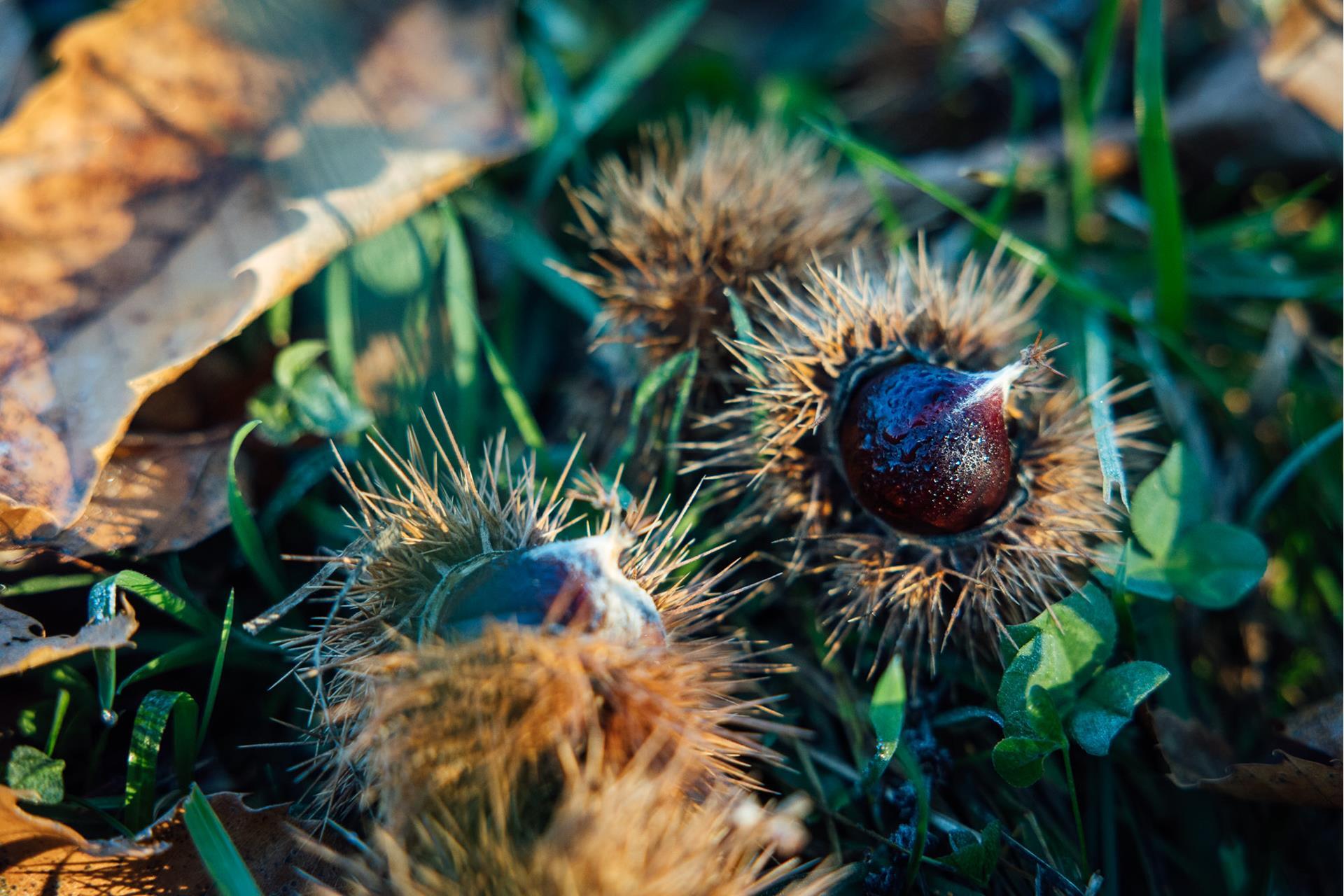
A Village Goes Nuts for Chestnuts

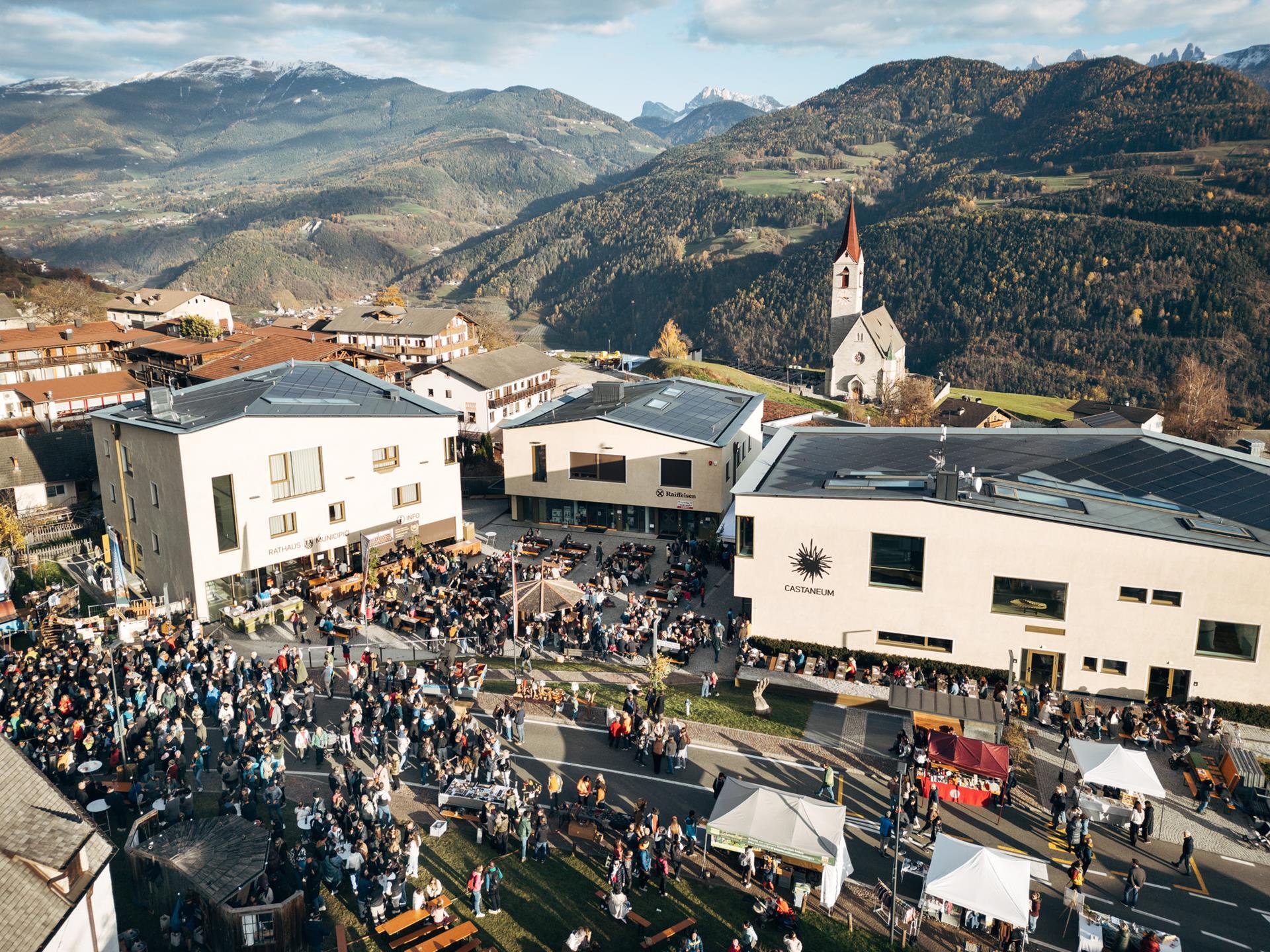
Clouds of smoke drift above the village of Feldthurns, but on this November day, there is certainly no need to call the fire brigade. The smoke rises from dozens of small, homemade roasting stoves lining the village streets. Each one has its own distinctive design and would be worthy of a photo feature in its own right.

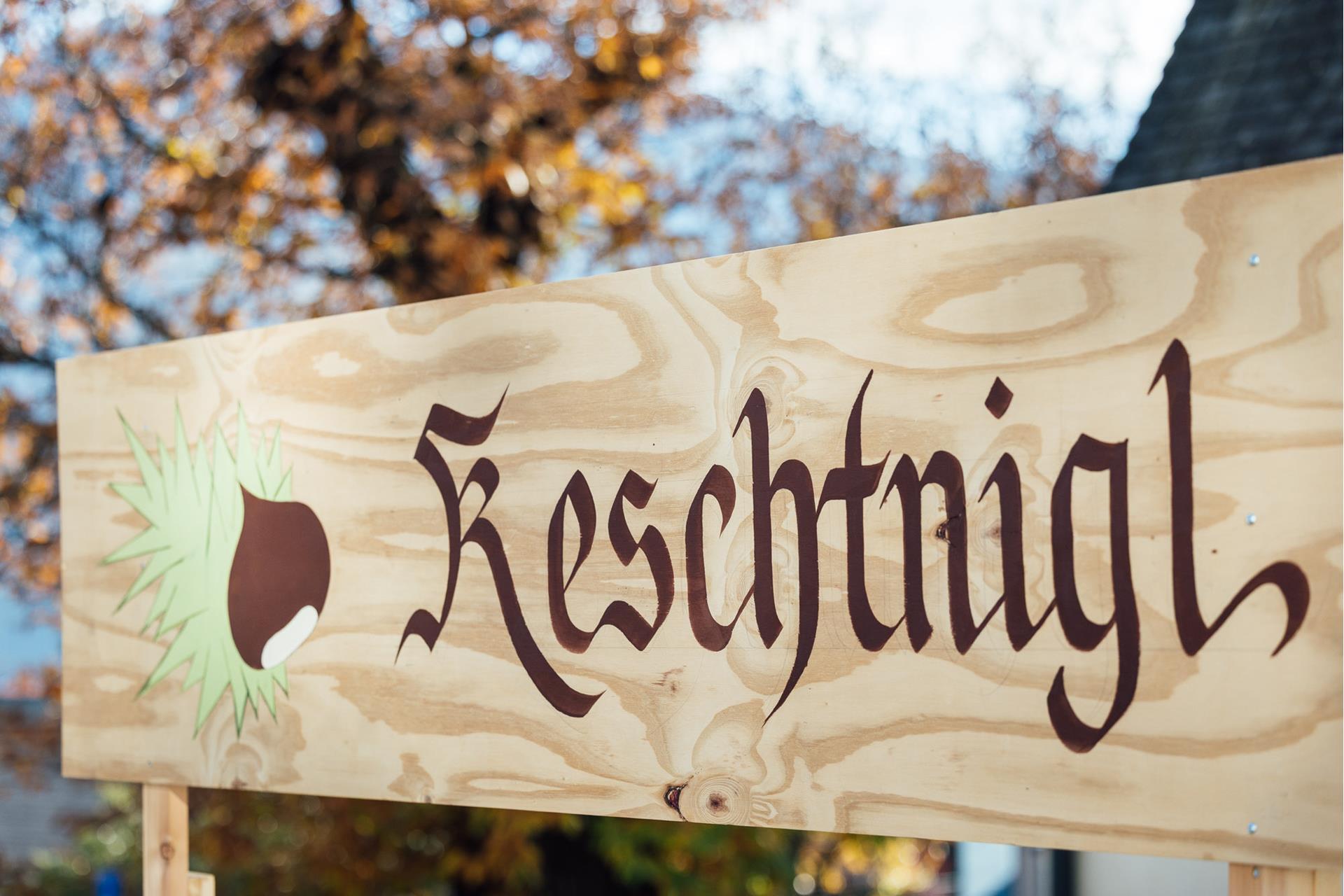
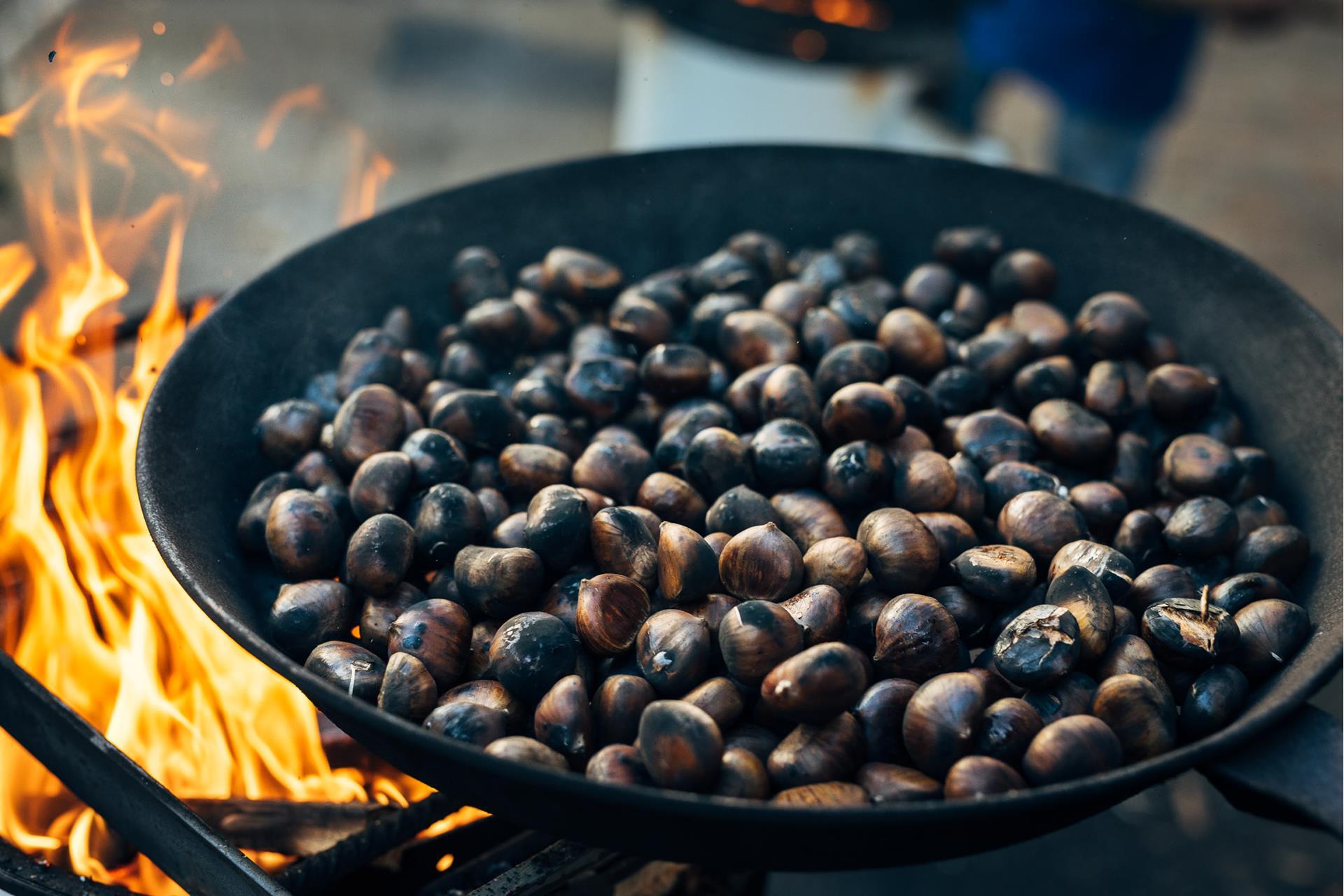
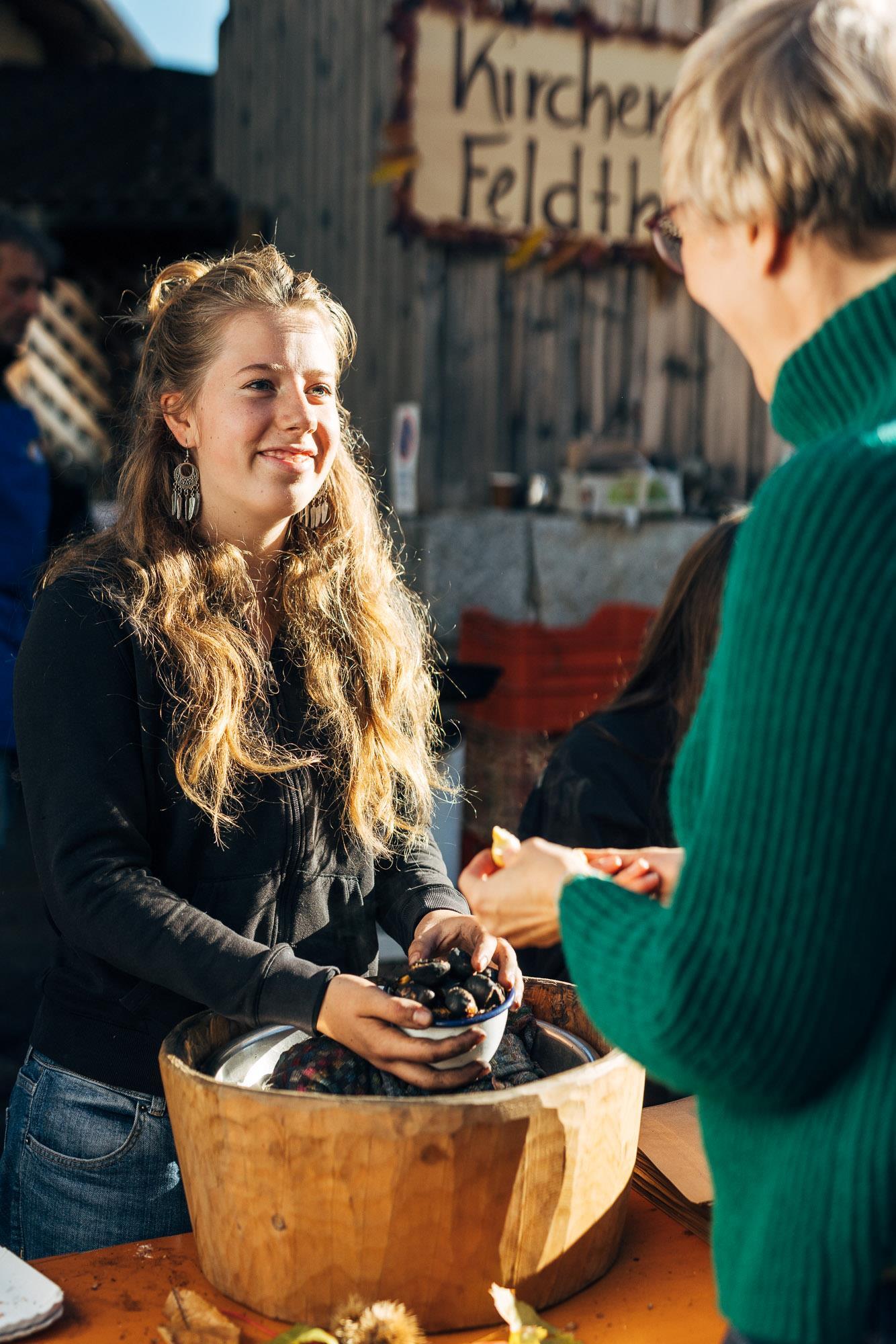
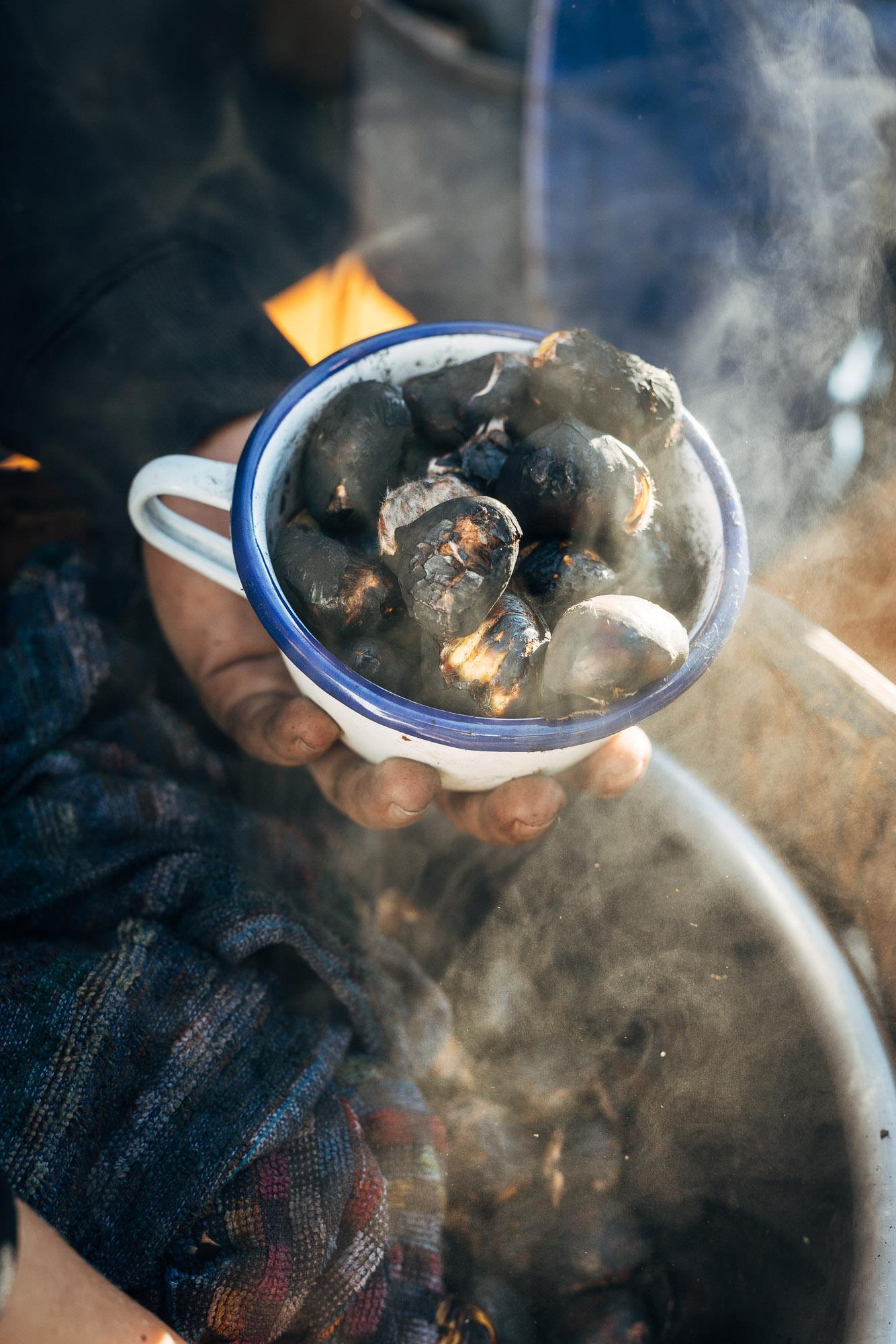
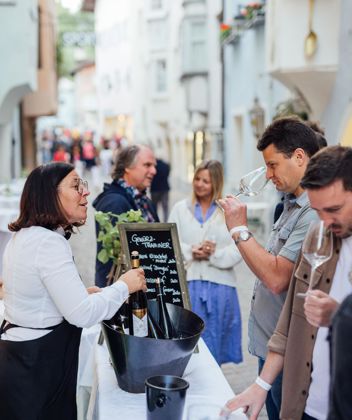
On the stoves, locals roast their “Keschtn”, the South Tyrolean dialect word for sweet chestnuts. It is Keschtnigl Sunntig, the lively celebration marking the end of three weeks devoted entirely to the chestnut, with events, tastings and two markets. The whole village is out and about. Some people are selling homemade products, others are sampling traditional Törggelen dishes, while many simply stop for a chat over a glass of wine.
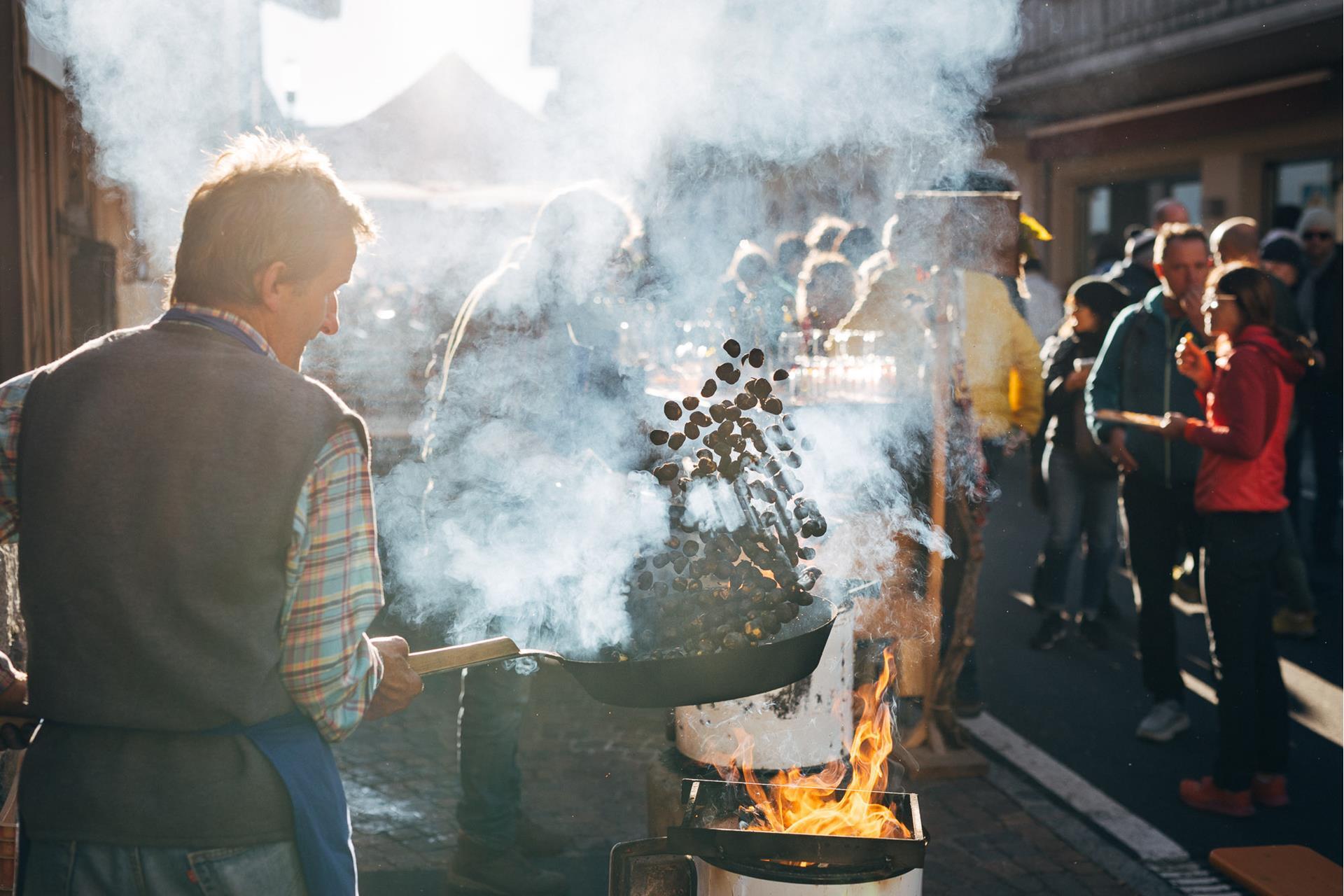
Locals roast their “Keschtn”, the South Tyrolean dialect word for sweet chestnuts.
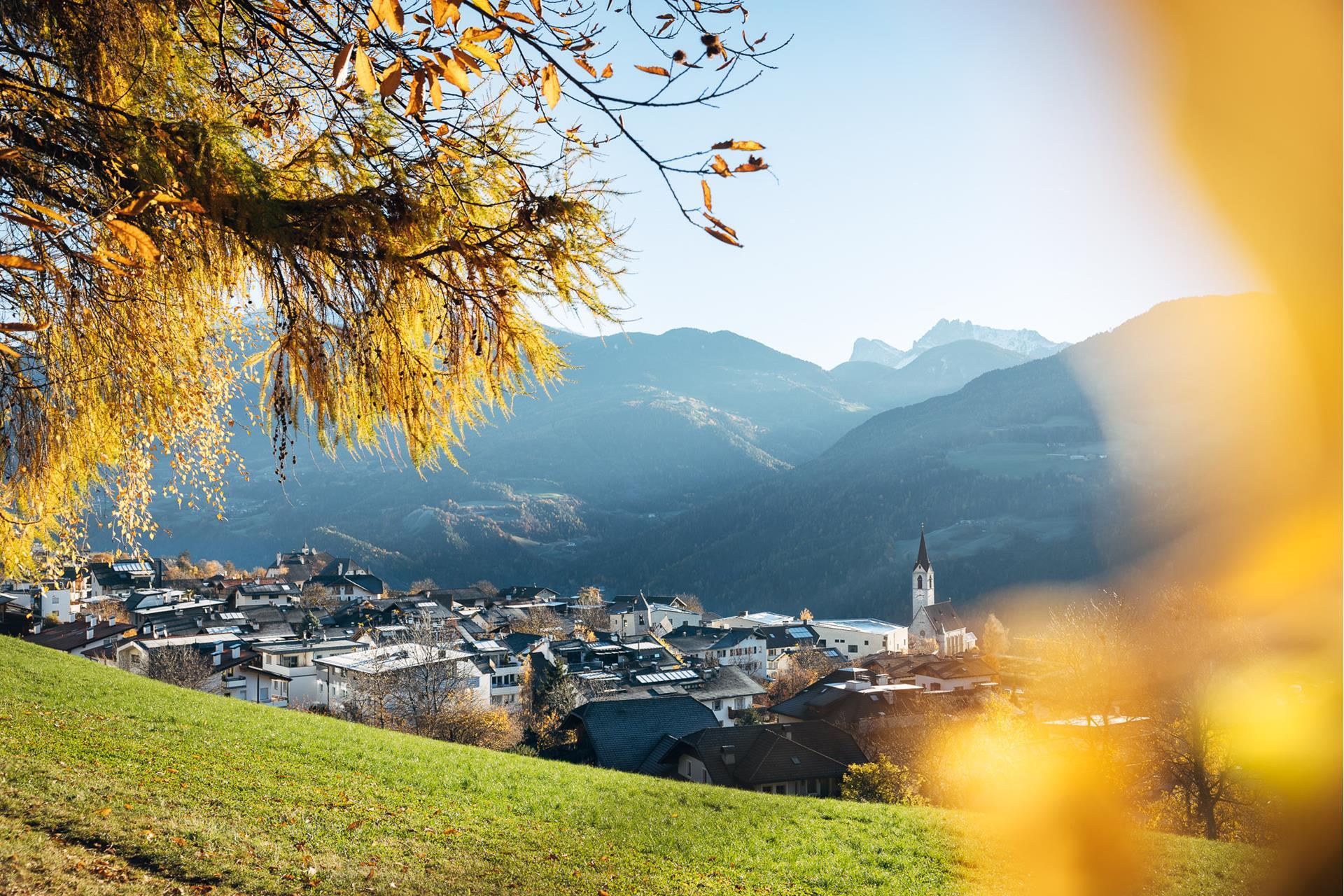
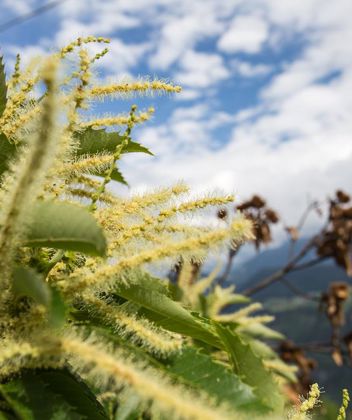
For centuries, sweet chestnuts were an essential staple food in the mountains. The hardy, undemanding trees thrived even on rocky slopes, and their fruit provided energy, vitamins, fibre and valuable minerals. Dried or ground into flour, chestnuts could be stored for long periods and used in countless different ways. The trees even survived the decades in which chestnuts gradually fell into obscurity. From the end of the 19th century onwards, food became easier to obtain and more varied, and the chestnut lost much of its former importance. Yet the ancient trees remained. Some of the chestnut trees on the slopes of the Eisack Valley are 300 years old, while others have been standing there for as many as 400 years.
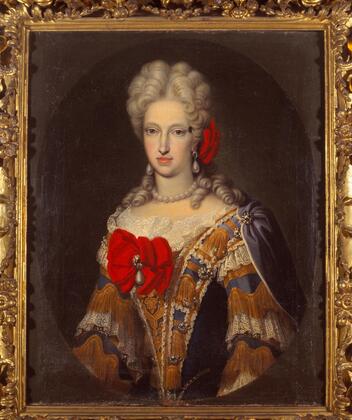
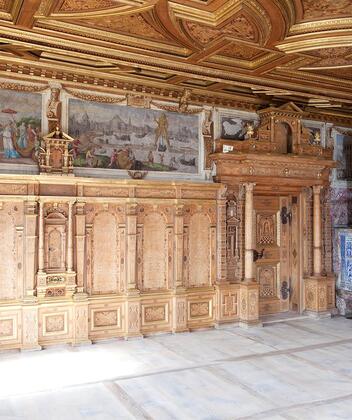
They were already growing when Raphael’s famous painting, the Sistine Madonna, was transported by horse-drawn carriage from Piacenza through the Eisack Valley to the King of Saxony in Dresden. They were there, too, when Goethe travelled through the region on his Italian Journey. The chestnut owes its revival to a renewed appreciation for traditional foods and local customs. As tourism began to grow in South Tyrol during the 1960s and 1970s, the fruit gradually returned to the spotlight. Ever since, Törggelen has no longer been enjoyed solely by the farmers, their families and helpers who, following a tradition dating back to the Middle Ages, would gather to celebrate a successful harvest. Visitors, too, have embraced the custom.
300 years old – and still on everyone’s lips: the chestnut has been at home in Feldthurns for centuries.
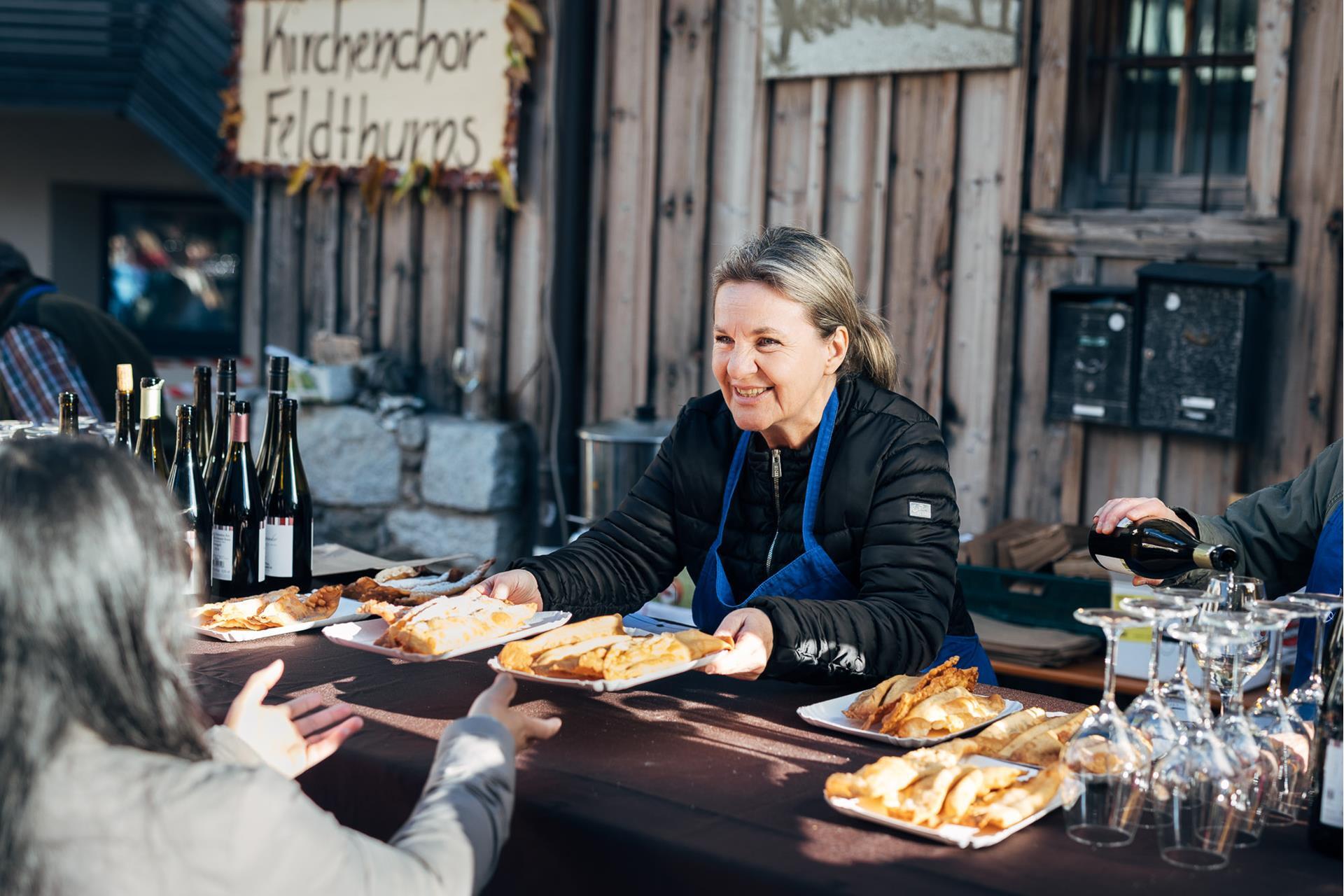
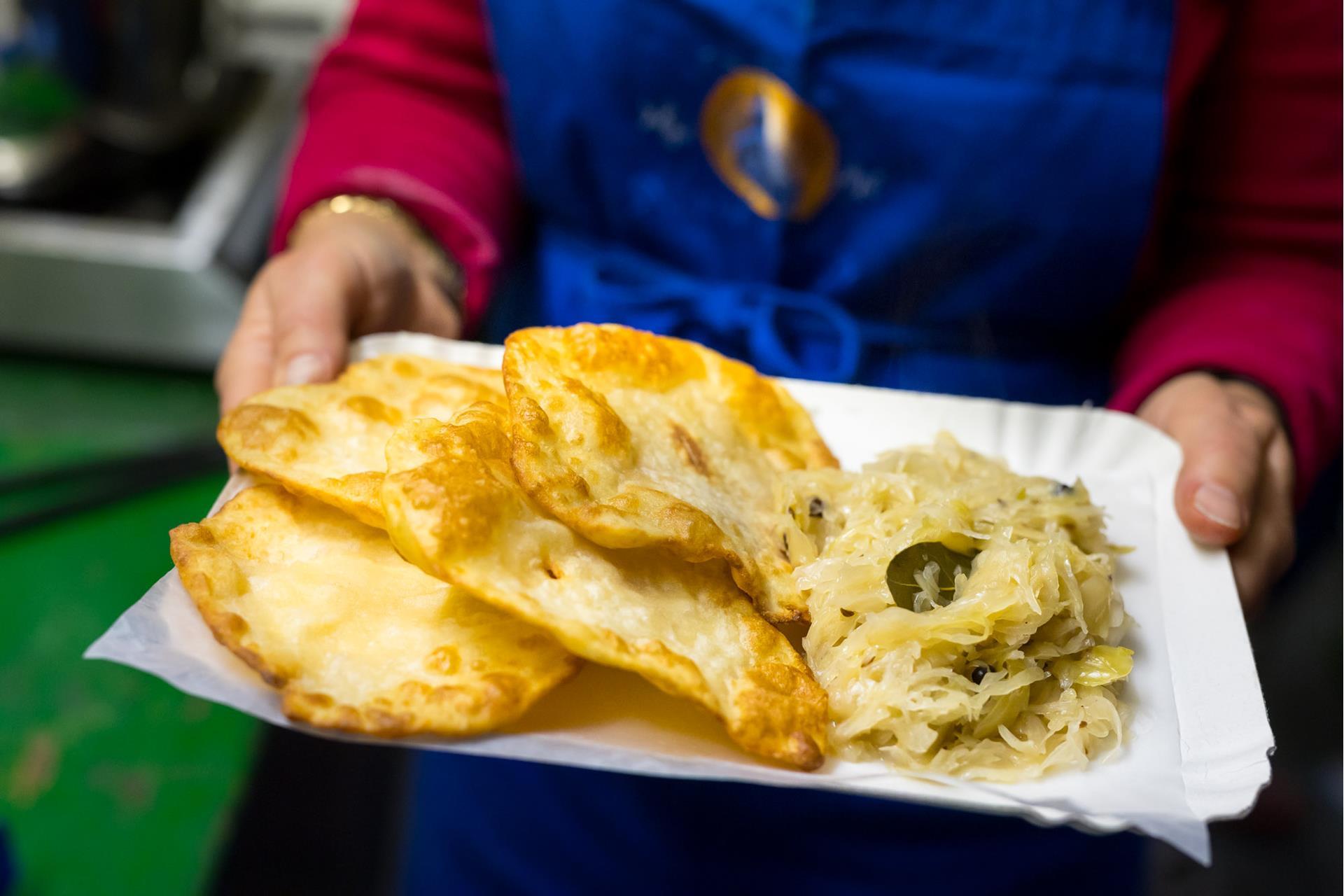
Naturally, chestnuts also take centre stage at the Chestnut Festival. Visitors can make their way along the village street, stopping at one stand after another and turning the entire day into one long Törggelen experience. At the stand run by the Feldthurns church choir, for example, sweet jam-filled pastries and traditional potato fritters with sauerkraut are prepared and served fresh. Two chestnut stoves are kept burning continuously. “Roasting chestnuts properly is a science in itself,” says Michael from the Loamgruberhof farm. “There are different varieties, and each one has to be treated differently. Some need to continue cooking after being taken off the fire, while others do not. Everyone has their own recipe. I like them crisp, with the shells split open and easy to peel. And to achieve that, you need a good, strong fire.”

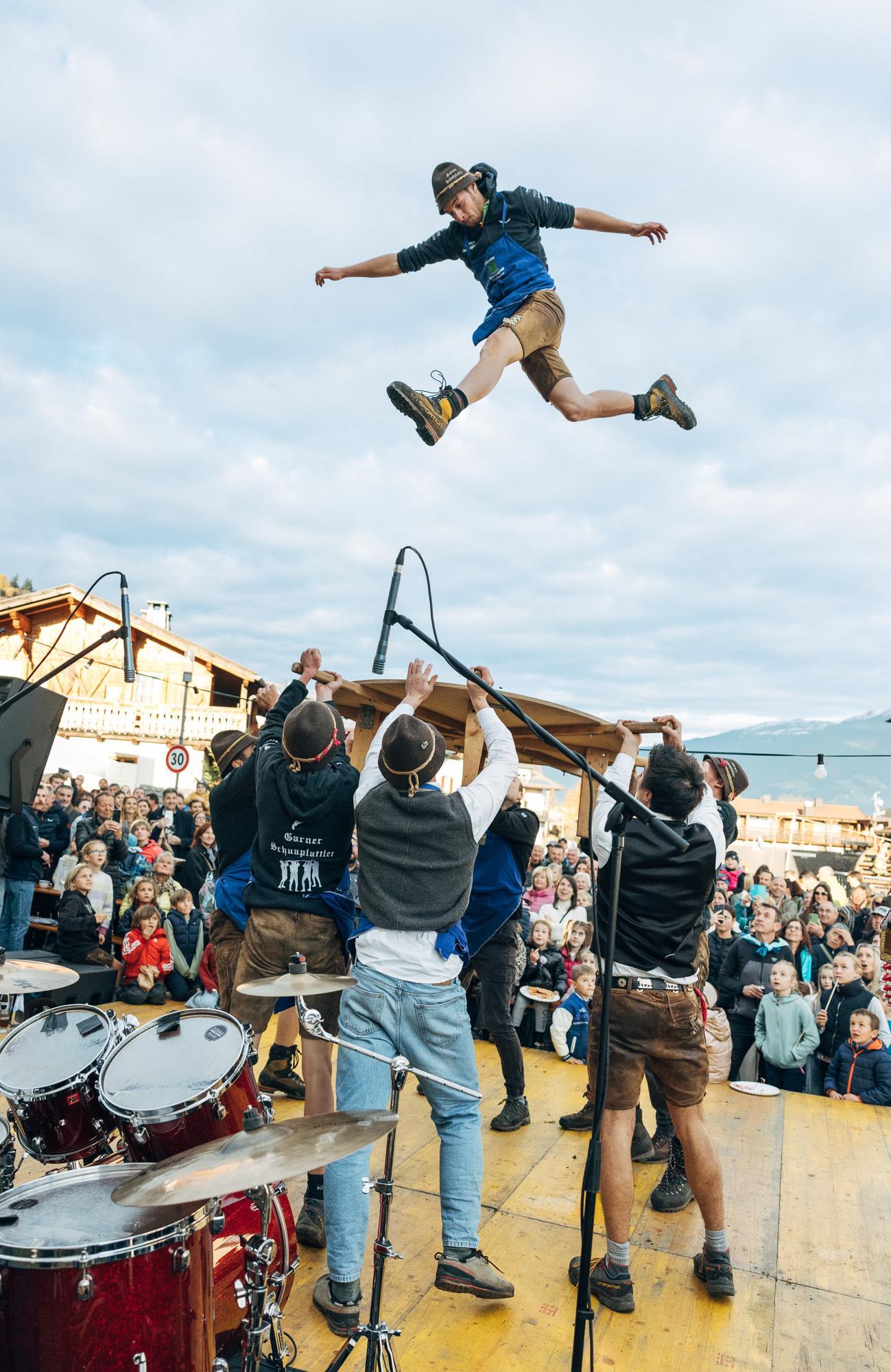
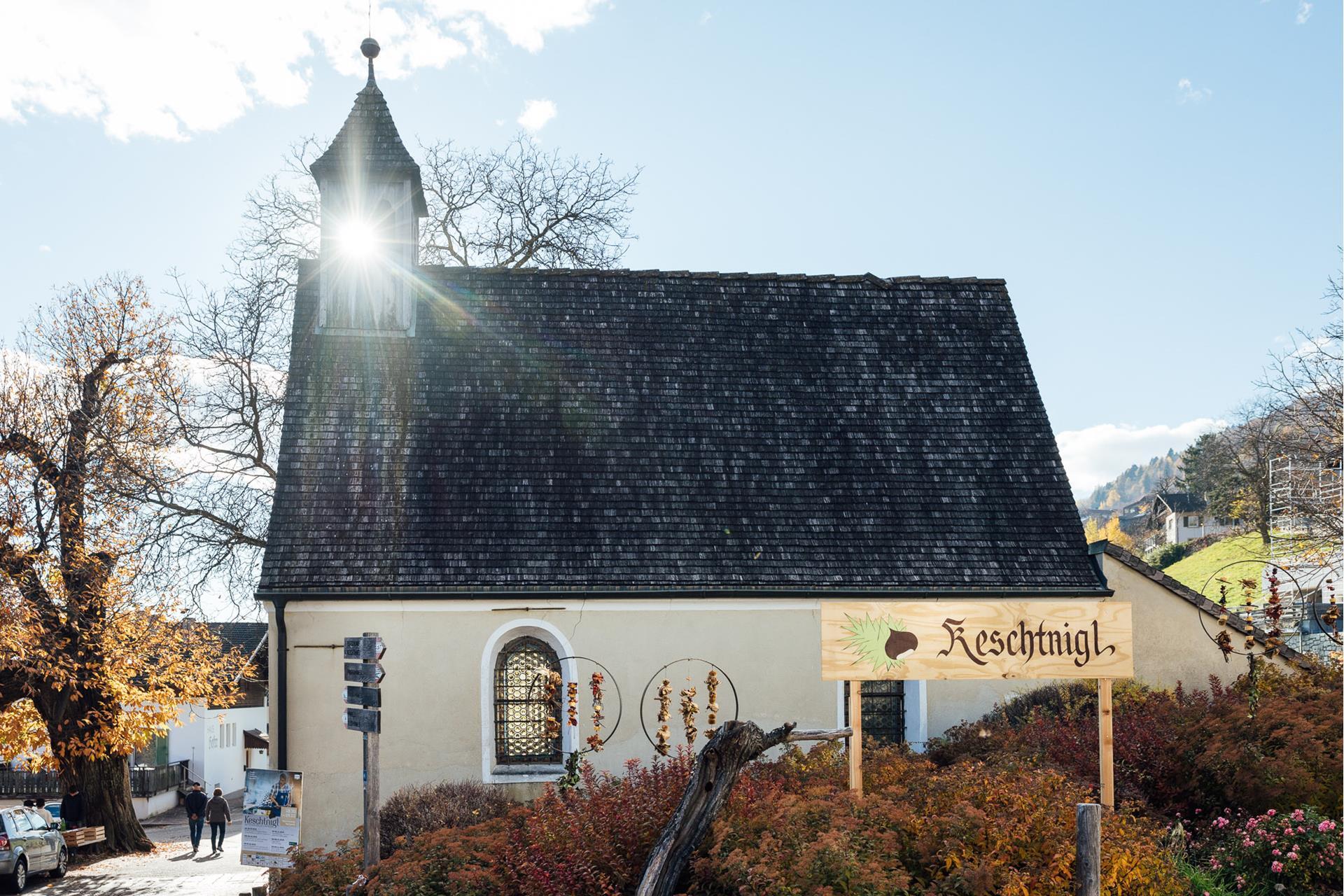
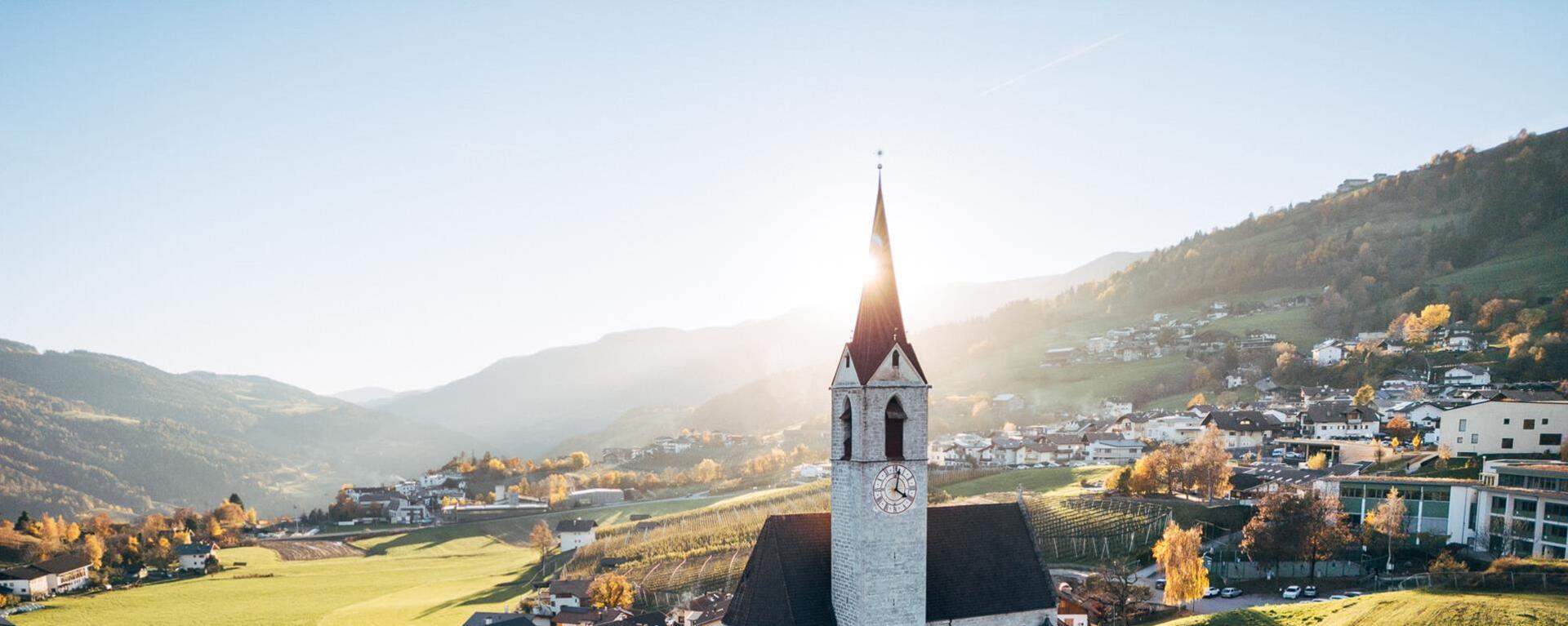
Suddenly, everyone begins moving towards St Lawrence’s Church, whose leaning tower rises above the centre of the village. Eight young men dance in a circle, holding a large round wooden platform above their heads. Another man stands on top of it before being propelled several metres into the air. It is a particularly acrobatic performance by the Garner Schuhplattler group. Through this traditional dance, the performers demonstrate their strength, skill and coordination. In earlier times, the main purpose of Schuhplatteln was to impress the young women watching. Judging by the enthusiastic crowd, it still seems to work today. Afterwards, the festivities continue with music.
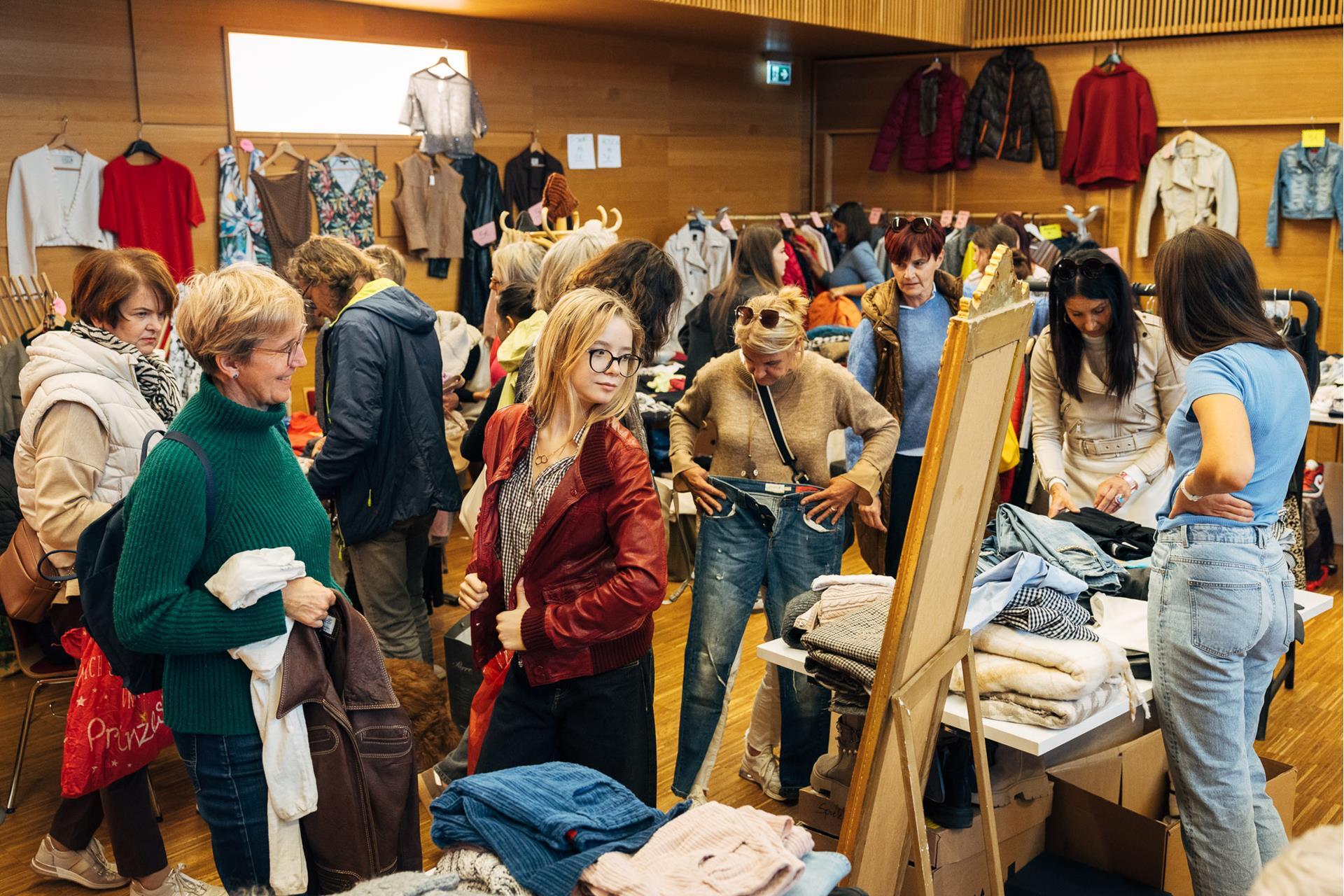
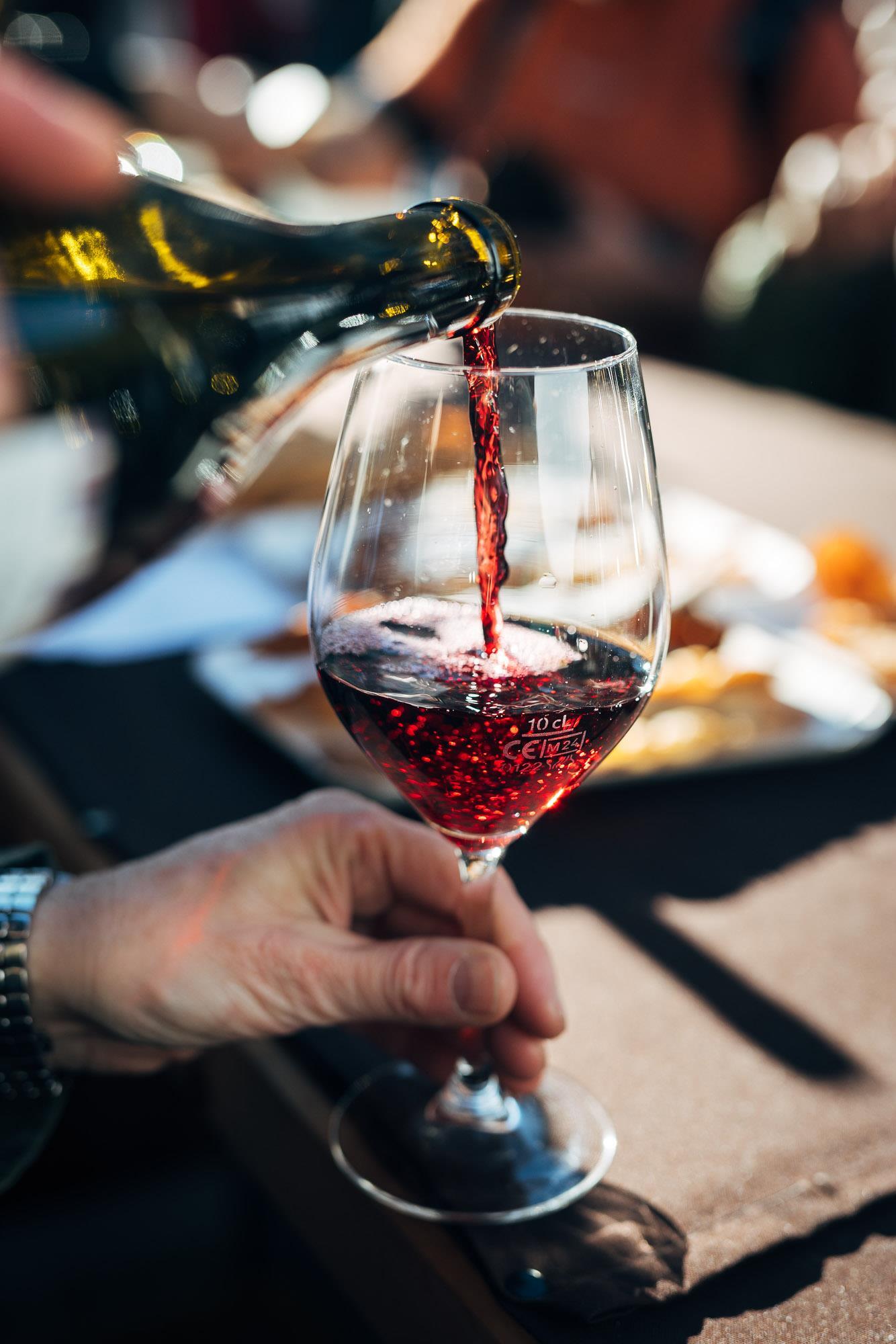
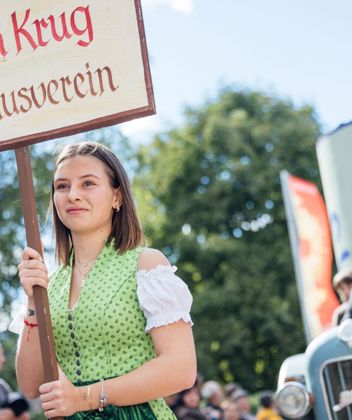
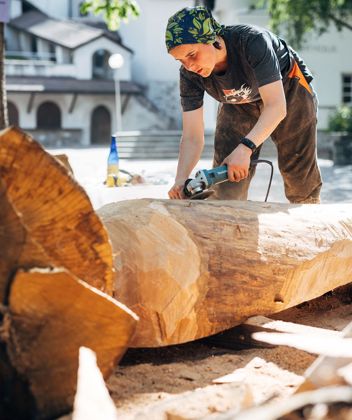
A closer look reveals why village life in South Tyrol is so vibrant. Almost every resident is involved in one or more local associations. These organisations play a vital role in making village festivals possible, while also raising money for their own activities or for charitable causes. The Nagila Proatladia association, for example, sells generous platters of ham and glasses of wine to support South Tyrolean doctors working in Africa. The Feldthurns climate group, meanwhile, organises a second-hand clothing market. “I’m always impressed by how committed and creative everyone is,” says Rosamunde, who is involved in several village associations herself. “There are so many beautiful stands. You can find traditional South Tyrolean crafts such as woodcarvings and quill embroidery, as well as hand-knitted hats, handmade jackets and ceramics.” She picks up a glass of red wine from Feldthurns and raises it towards me in a toast.
«As far as I’m concerned, this festival is simply fantastic.»
Text: Sylvia Pollex
Photos: Thomas Rötting
Pubblication: 2025
2025-keschtnigl-c-thomas-roetting-125