Lukas Mayr | *1994 in Bozen / Bozen, lives in Brixen / Bressanone
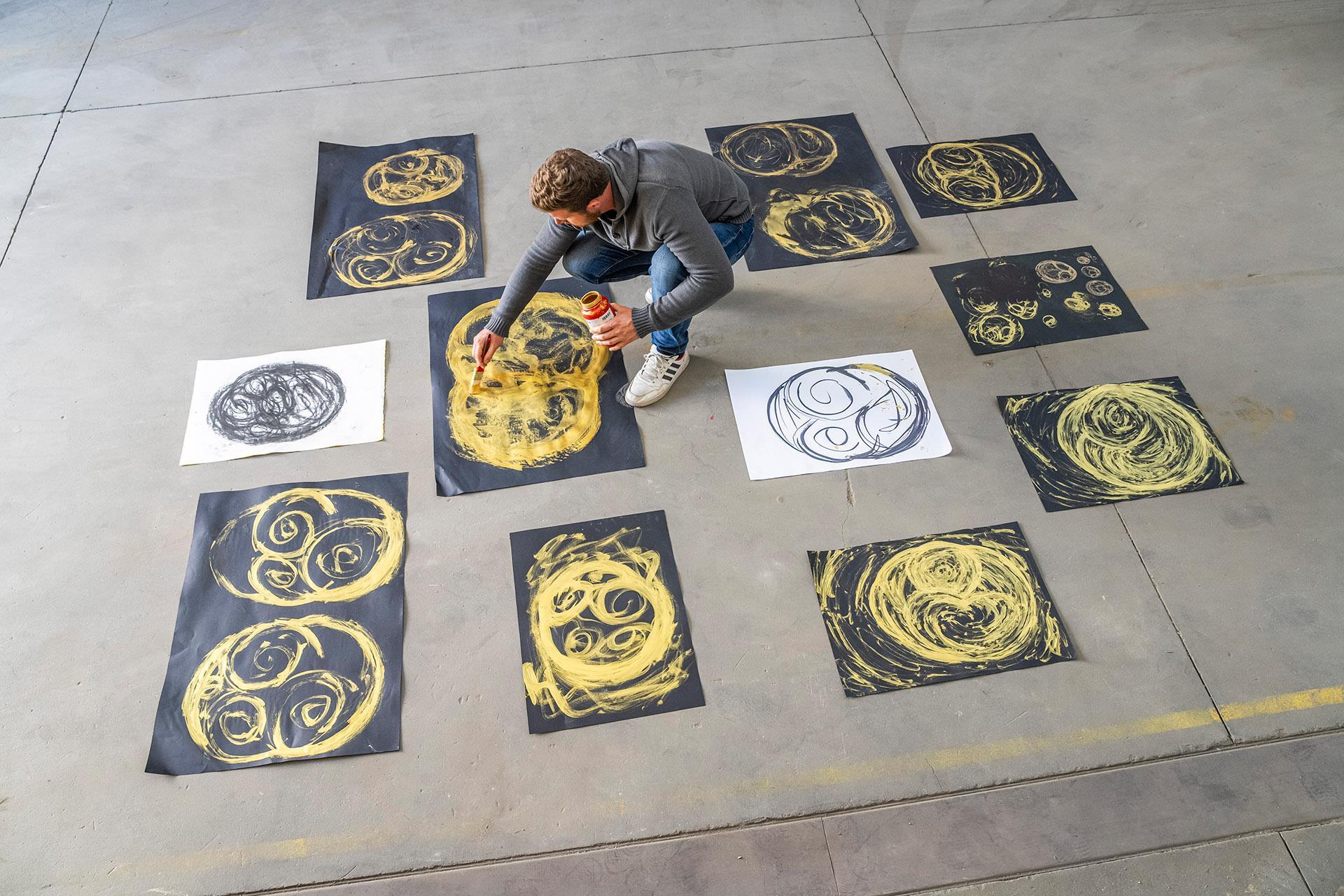
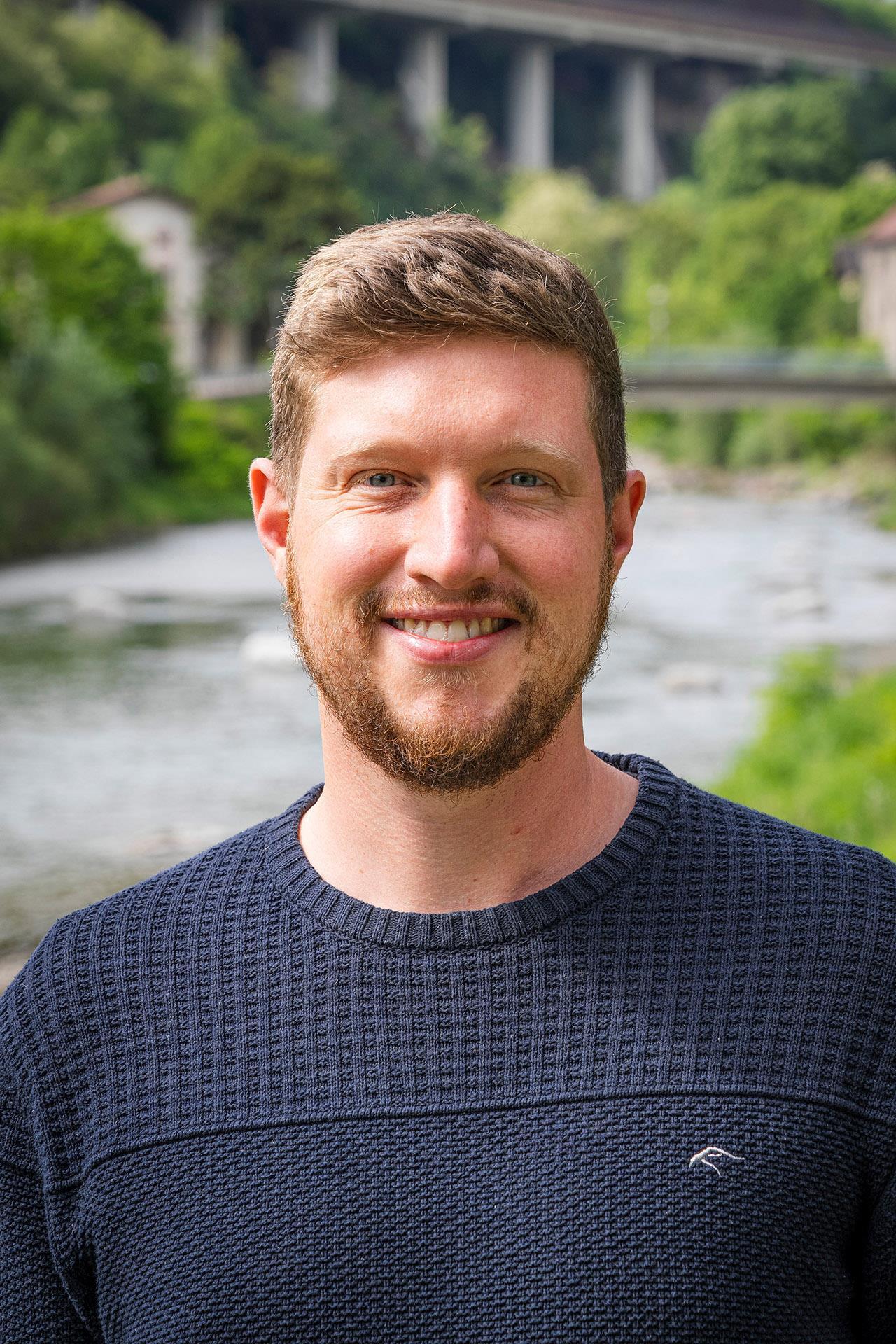
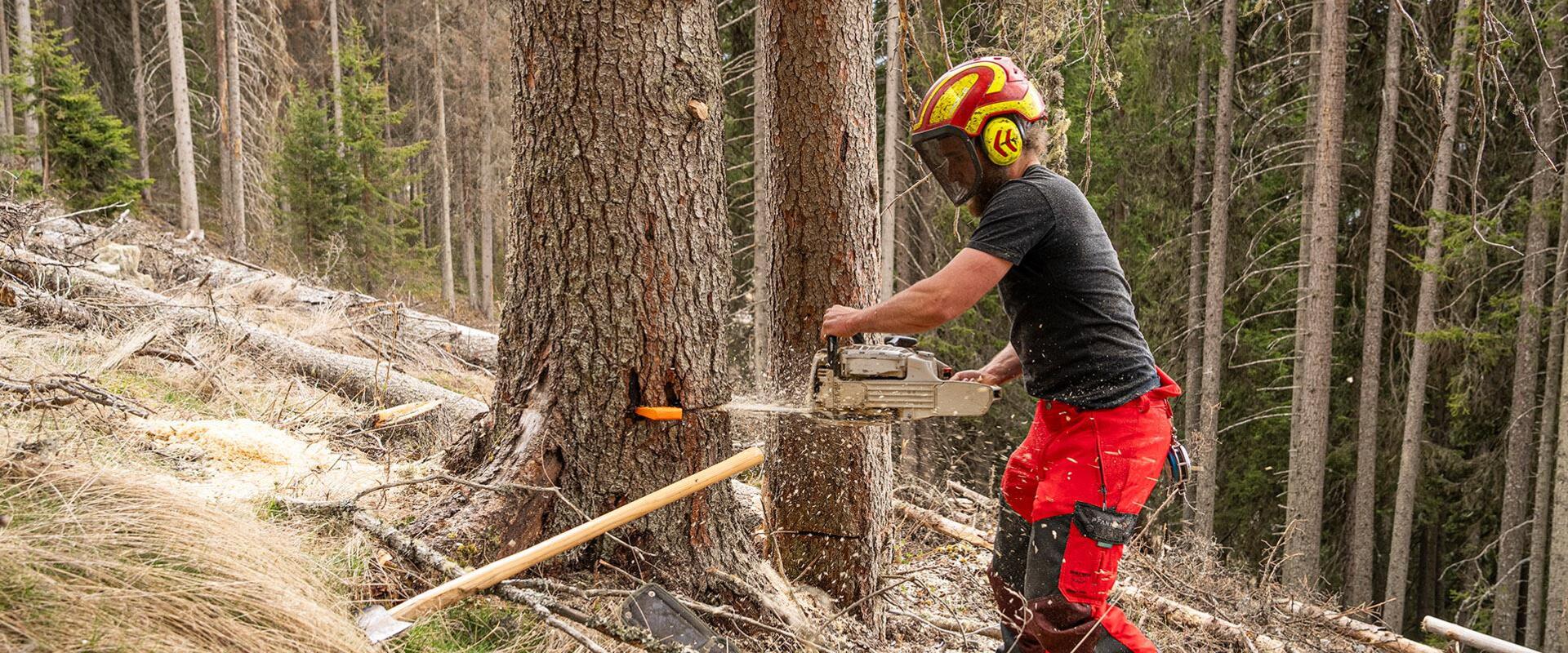
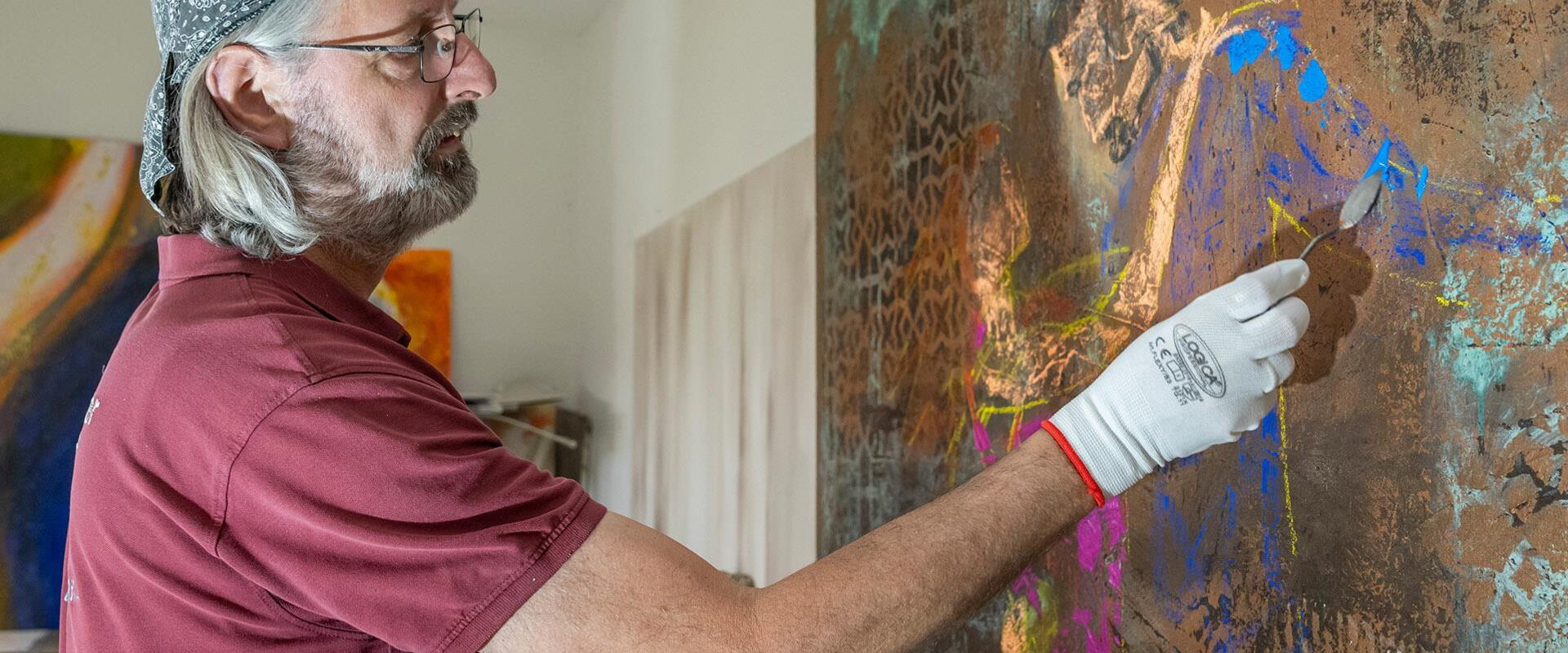
Since childhood, Lukas Mayr has been fascinated by round, spherical forms – for him the most effective form in nature, from the raindrop in free fall to the soap bubble. He found his way to art in 2017 through a telepathy course: Trained as a heating and plumbing technician, he felt a desire for something more, attended personal-development seminars and, from 2018, completed a three-year training programme as a wood sculptor at the Provincial Vocational School for Artistic Craftsmanship in Val Gardena. He has immersed himself in the study of “Sacred Geometry”. His works are meant to transmit positive energy and to raise questions in which people find hope. “You become what you do” – he lives and works by this sentence, both as an artist and as initiator of the Triennale Klausen. For five years, Lukas served on the committee of Unika, the Val Gardena sculptors’ association, and is a member of the Südtiroler Künstlerbund. Since 2021, he has exhibited actively at home and abroad. Several times a week, he accompanies a young woman with a disability at night – encounters from which, as he says, he learns a great deal.
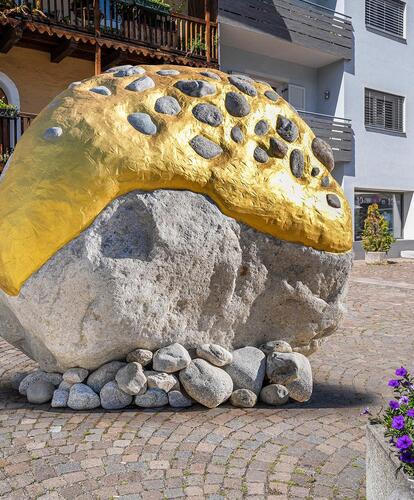
“Philosopher's Stone”
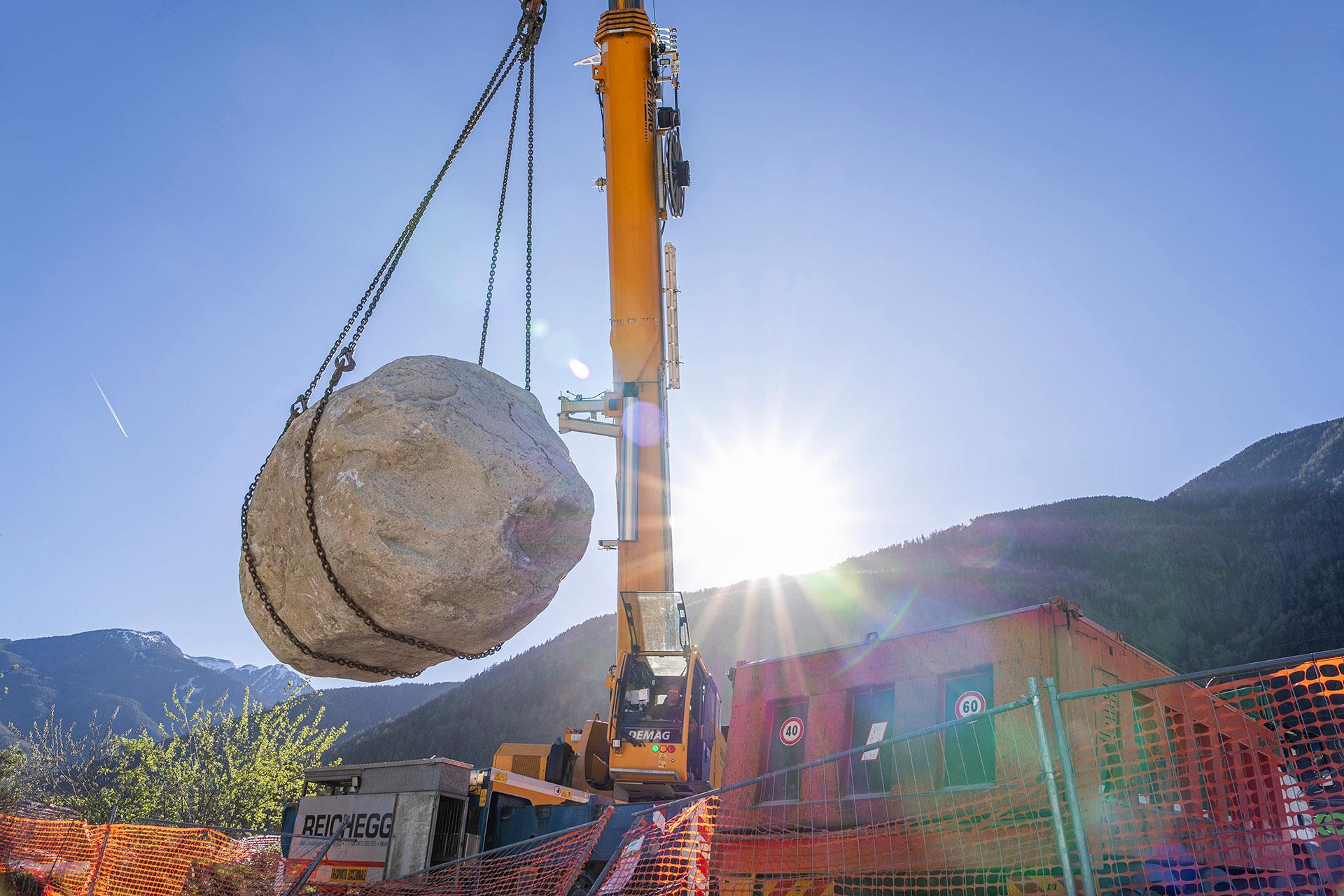
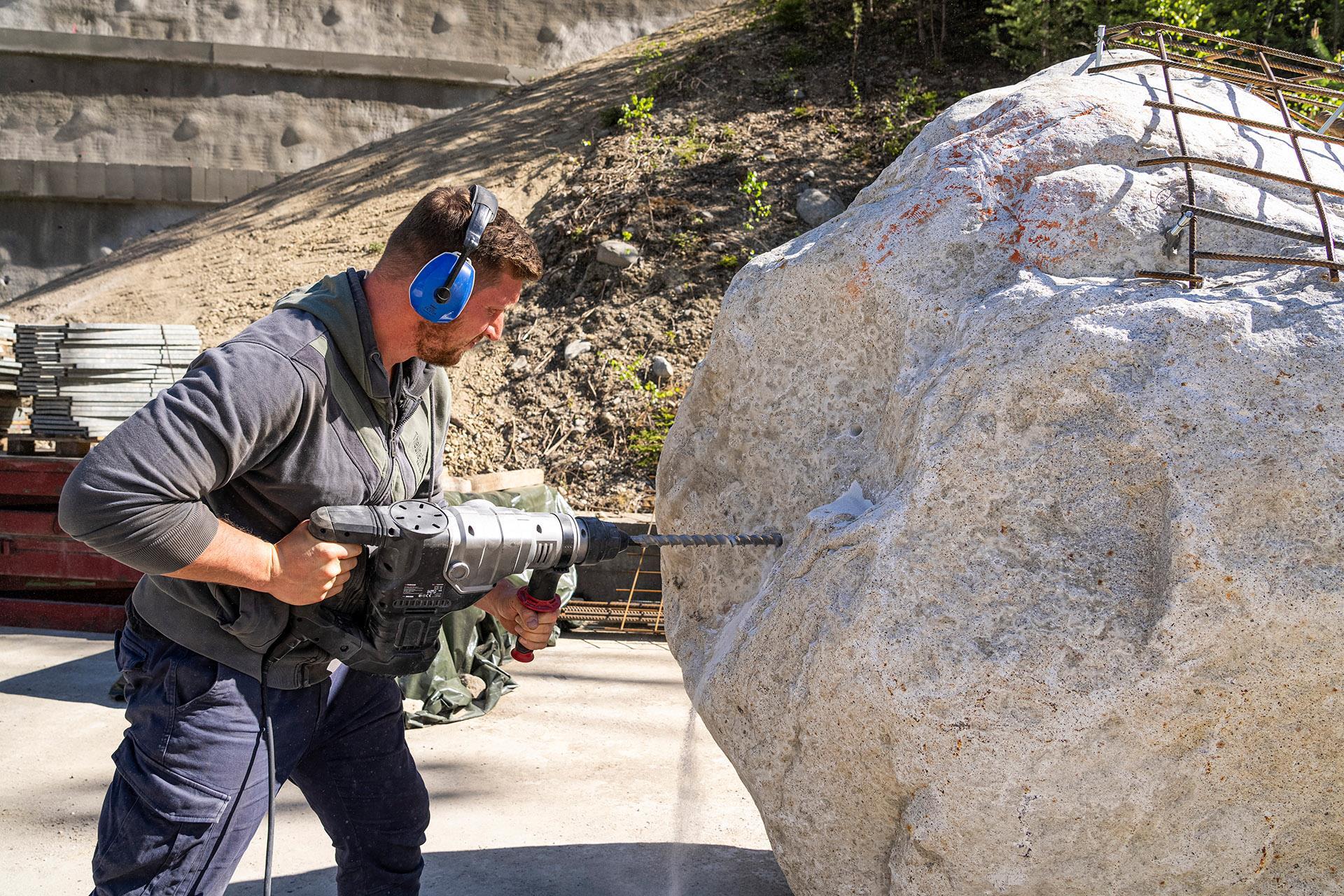
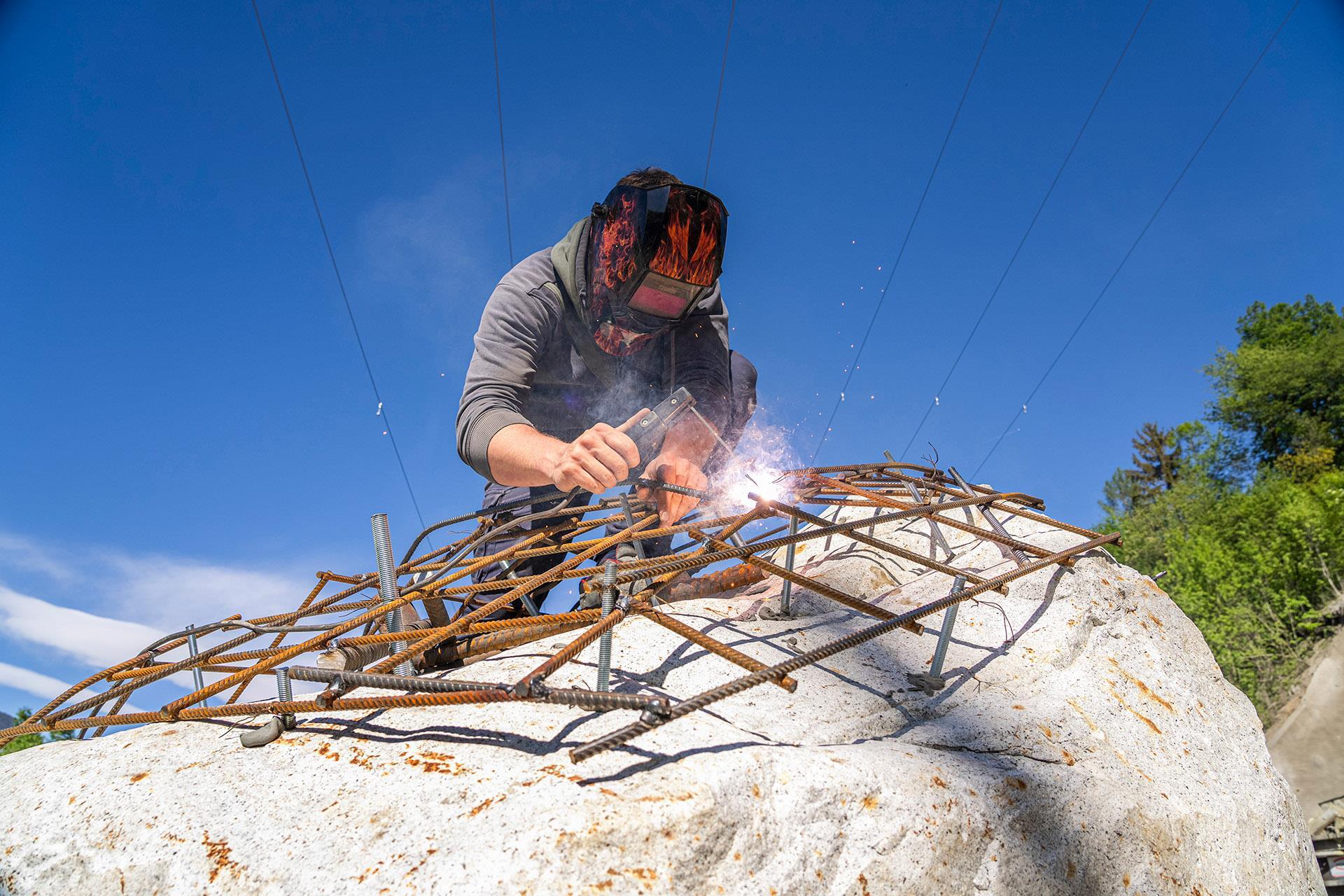
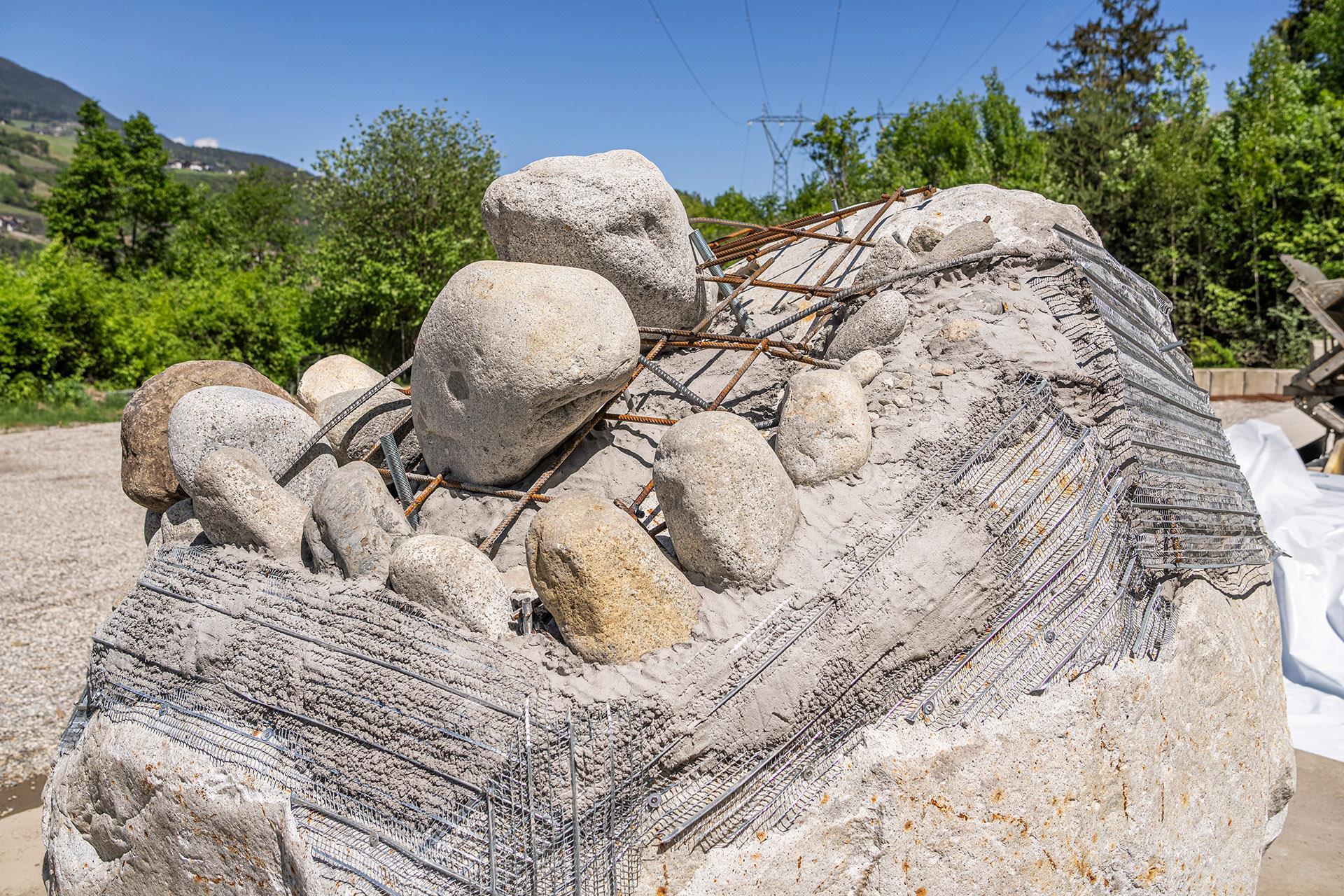
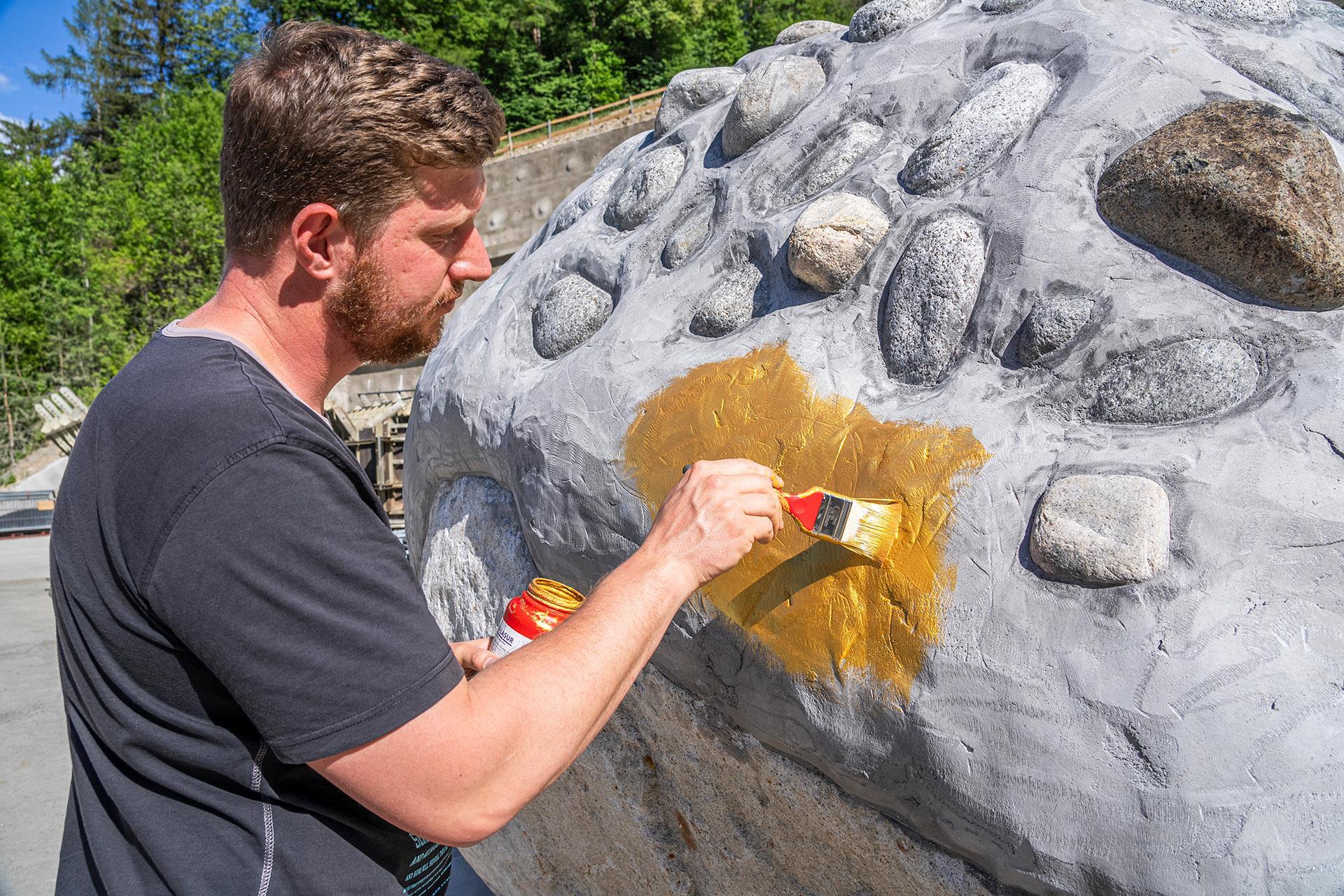
A boulder of Eisack Valley granite, buried beneath the earth in Vahrn for thousands of years, emerges into the light. Lukas Mayr recovered it and set it up in the middle of Fragen square – mighty and round, on a bed of smaller stones; its top is gilded and shimmers in the light. For Lukas, the stone is more than material: a connection between humanity and something greater. The first tools were made of stone, the pyramids and Stonehenge of solid rock – wherever people wanted to create something lasting, they reached for stone. 'Mass is energy', he says; for him, weight is the soul of a work – something one does not see, but feels. The title alludes to Paulo Coelho's “The Alchemist”, in which the philosopher's stone stands for transformation and for the insight that true wisdom arises only through personal growth. And so the work asks everyone who pauses before it: What are you building? What is your own microculture?